 Fairy Tales, Stories & Games for Kids Fairy Tales, Stories & Games for Kids
Grandpa Mahir and Button-Eye — A Night of Love and Wisdom in the Halkal Forest
Contents
- Once upon a time…
- Whispers of the Halkal Forest
- Grandpa Mahir and the forest folk
- The bat’s tale: neither bird nor beast
- What the story teaches
- Light till dawn — the trace of love
- Frequently Asked Questions
Once upon a time, on the edge of the Halkal Forest, lived a gentle watchman everyone called Grandpa Mahir. His grandchild’s nickname was Button-Eye, because the child’s eyes sparkled like tiny buttons. Most evenings they sat side by side, listening to the forest breathe and sharing stories that tied their hearts together.
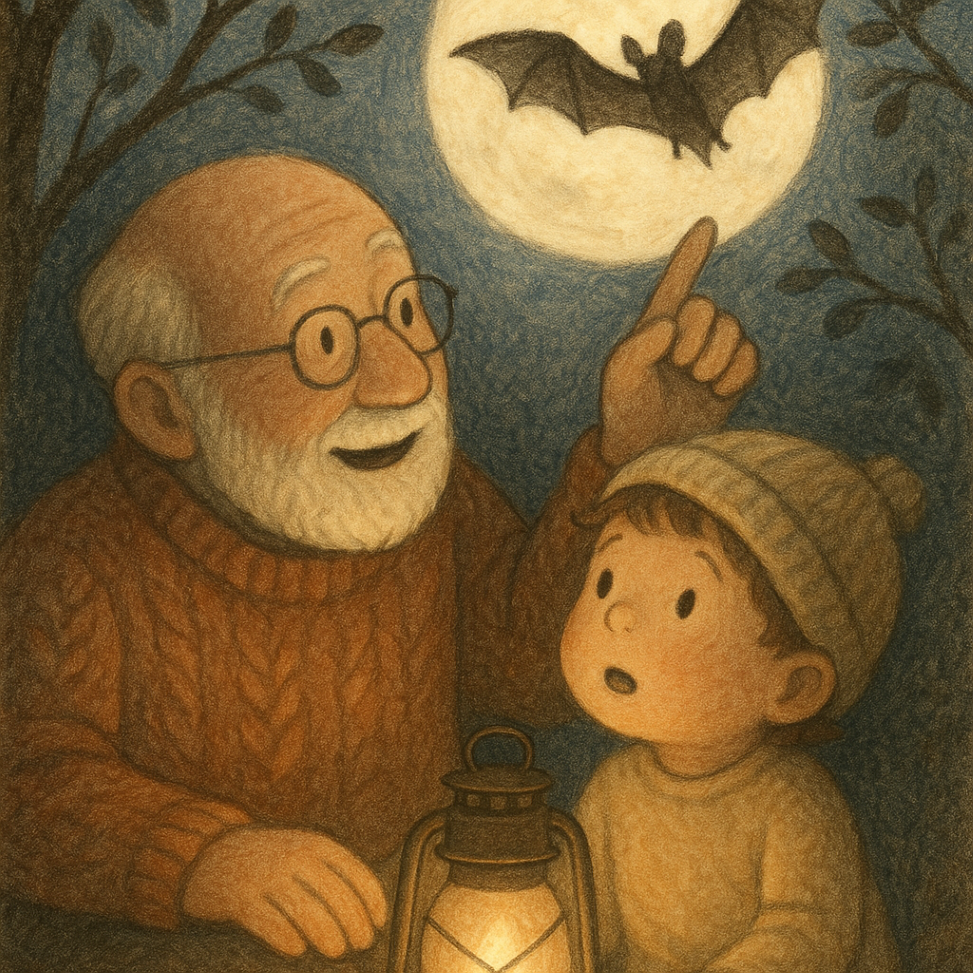
Whispers of the Halkal Forest
At dusk the forest drew a long, peaceful breath. Leaves trembled, crickets stitched a thin melody, and a cold spring whispered from far away. By day Button-Eye gathered wild apples and berries; by night Grandpa Mahir washed them and set a tiny “autumn supper” on leaves. The child always asked, “Grandpa, which story tonight?” and the old man would smile: “Tonight, about a creature who called itself neither bird nor beast.”
Grandpa Mahir and the forest folk
Grandpa knew the forest like a poem: which ridge echoed the partridge’s call, which hoofprints belonged to deer that drank at the spring, where a squirrel had hidden a nut. He taught one rule each evening: “Greet the forest — it will open paths. Thank the tree — it shares its shade. Bless the water — it speaks through life.” Button-Eye learned these rules with a bright and honest heart.
The bat’s tale: neither bird nor beast
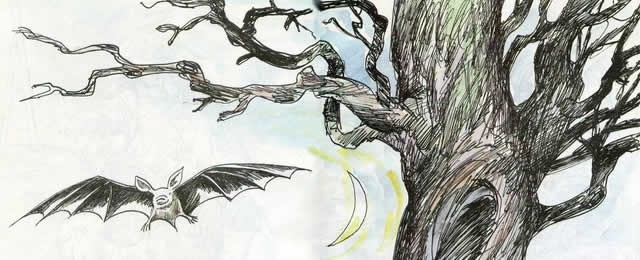
Moonlight fell like silver threads between branches. A small shadow fluttered across the sky. “Look!” the child whispered. “It flies, but it doesn’t look like a bird.” “A bat,” said Grandpa. “And it carries an old, instructive tale.”
He began: “Long ago the bat’s ancestor met a falcon at noon. ‘By the eagle’s decree,’ said the falcon, ‘all birds must send their sons to the army.’ ‘I am no bird,’ said the bat and fled. Later it met a fox. ‘By the lion’s decree, all beasts must send their sons to the army.’ ‘I am no beast,’ said the bat and fled again. From that day on it trusted neither birds nor beasts and chose the night for its lonely flight.”
Grandpa’s voice softened: “Here is the bat’s burden — not to belong, not to choose. If you run from choosing, you must carry the weight of loneliness. So learn who you are, and live your name with courage. Don’t run from people, and never run from the truth.”
What the story teaches
Stars multiplied. Button-Eye leaned on Grandpa’s shoulder: “Grandpa, who am I?” The old man brushed the child’s hair: “You are Button-Eye. Your name shines, but your loyalty, kindness, and responsibility will be the true light people see.”
They walked home along the path. A squirrel dropped a nut and darted away; a partridge clucked once and fell quiet. High on the moon’s rim a bat traced a dark line. At the watchman’s hut the lamp’s glow spread across the wall. They shared the last berries. “To avoid the bat’s mistake,” the child said, “I will stand by my word — small or big.” Grandpa smiled: “That is how we walk through night — with love in one hand, responsibility in the other.”
 Read more tales here.
Frequently Asked Questions
What ages is this story best for?
Ideal for ages 5–10. The language is gentle and the theme invites thoughtful talk. Also works as a read-aloud for younger kids.
What is the main message?
Know yourself, keep your word, and carry love together with responsibility.
Why does the bat fly at night?
In the fable it symbolizes “in-between” uncertainty; in biology, bats are nocturnal mammals.
How can families use this story?
Draw “Who am I?” pictures, discuss names and deeds, invent an alternate ending where the bat chooses a side — truth.
Classroom idea?
Role-play the eagle, lion, and bat to explore choice and accountability.