 Fairy Tales, Stories & Games for Kids Fairy Tales, Stories & Games for Kids
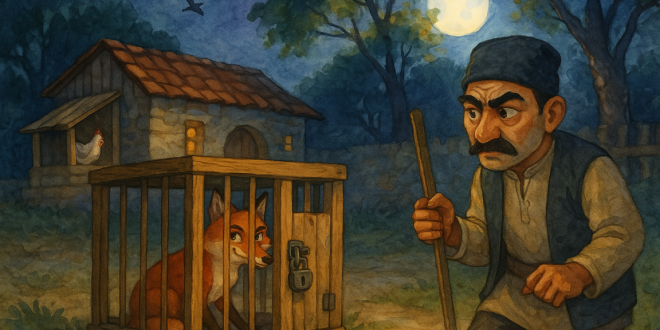
The Fox and the Wolves story — cleverness and consequence
The Fox and the Wolves story tells of a cunning fox, nine hungry wolves, and a cautious villager who learns that wit, patience, and responsibility matter more than greed or brute force. This Azerbaijani folktale has traveled across generations, teaching children that clever tricks can save the day — but deceit can bring its own punishment.
Introduction: a village by the forest
Once upon a time, at the edge of a thick forest, there was a peaceful village. The villagers raised sheep, goats, chickens, and worked hard under the sun. But nearby lived nine wolves and one sly fox. The wolves were clumsy and rough, the fox smart and crafty. Every night, the wolves attacked the village, stealing sheep and scaring the people. The fox, meanwhile, came every other night, sneaking into the henhouse to steal a chicken or a chick for dinner.
The wolves’ raids and the sly fox
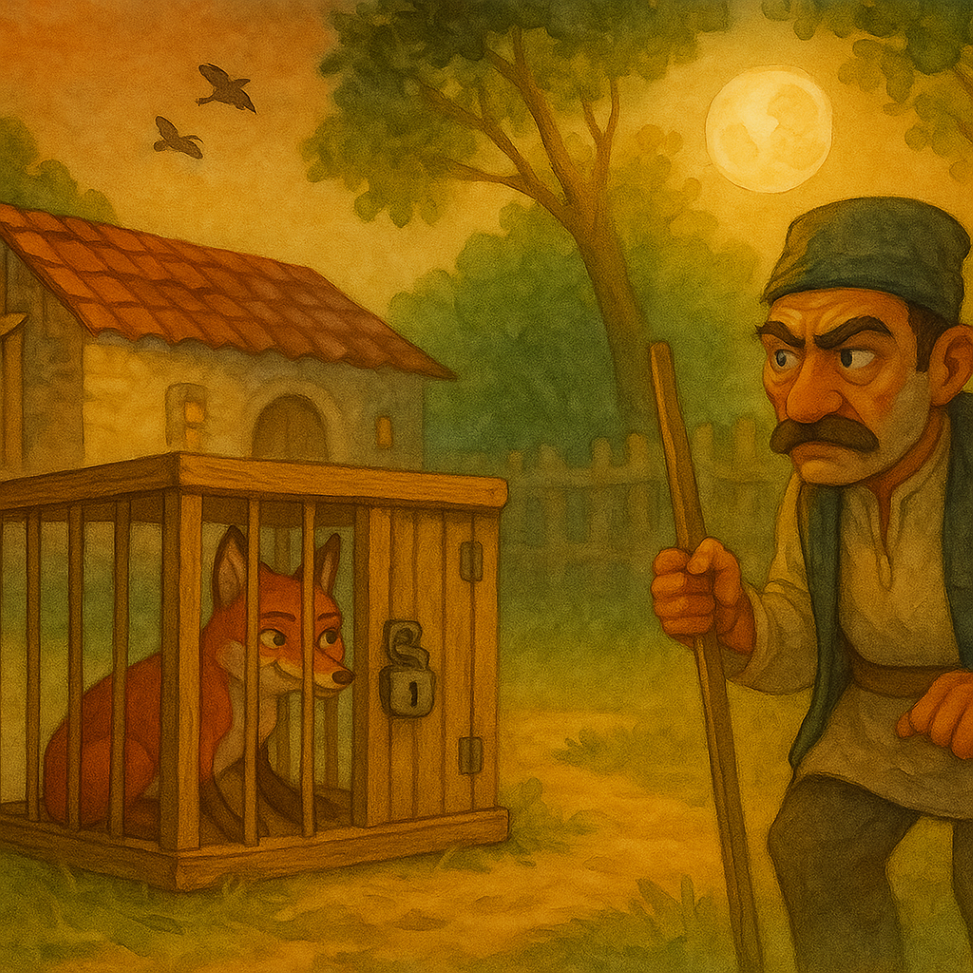
The poor villager who owned that henhouse was fed up. He tried traps and fences, but the clever fox always found a way in. One night he swore, “No matter what it takes, I’ll catch that rascal!” That night he hid beside the henhouse, clutching a stick, waiting silently until dawn. As the sky turned pale, the fox appeared, slipped through the usual hole — and the villager pounced! He blocked the hole and stormed in, swinging his stick.
“Villager, spare me!” cried the fox. “I’ll give you whatever you want, just don’t kill me!”
The villager, moved by pity, stopped beating him. Instead, he locked the fox in a strong cage, tied it tight, and went home to rest.
The capture and the cage
When morning came, the fox called out again: “Kind villager, you spared my life. Show mercy once more. Let me go back to the forest, find food for myself — and I’ll even bring you good fortune!”
The villager laughed. “You, bring me fortune? You’re nothing but a thief with fur!”
But the fox begged and begged until the villager agreed — with two strict conditions.
Two conditions: never return and catch nine wolves
“First,” said the villager, “once released, you’ll never come near this place again. Second, you must catch those nine wolves from the forest and bring them to me.”
The fox’s ears drooped. “The first I can promise. But the second… the wolves will tear me apart!” The villager shrugged. “That’s your problem.” Finally, the fox sighed, “All right, I accept. Just let me out.”
The villager, wary of the fox’s tricks, hesitated. But finally, muttering “Curse that devil!” he opened the cage. “If I ever catch you again, you’re dead meat,” he warned.
The meeting in the forest
The fox dashed into the woods, hunted a pheasant and a quail, ate until full, then dozed off in his den. By sunrise, the memory of his promise returned. “If I don’t fulfill my word, that man will surely kill me,” he thought. Yet his cunning nature whispered, “Ah, what will be, will be.” So he wandered off — and soon ran into nine starving wolves.
The wolves circled him, teeth bared. “Dinner!” they growled. But before they lunged, the fox raised his paw: “Brothers, wait! I’ve come to take you to a feast — tender, juicy gazelle meat awaits!”
The wolves drooled. “Where is it?” they asked eagerly. “Follow me,” said the fox, pretending confidence.
The riverside trap
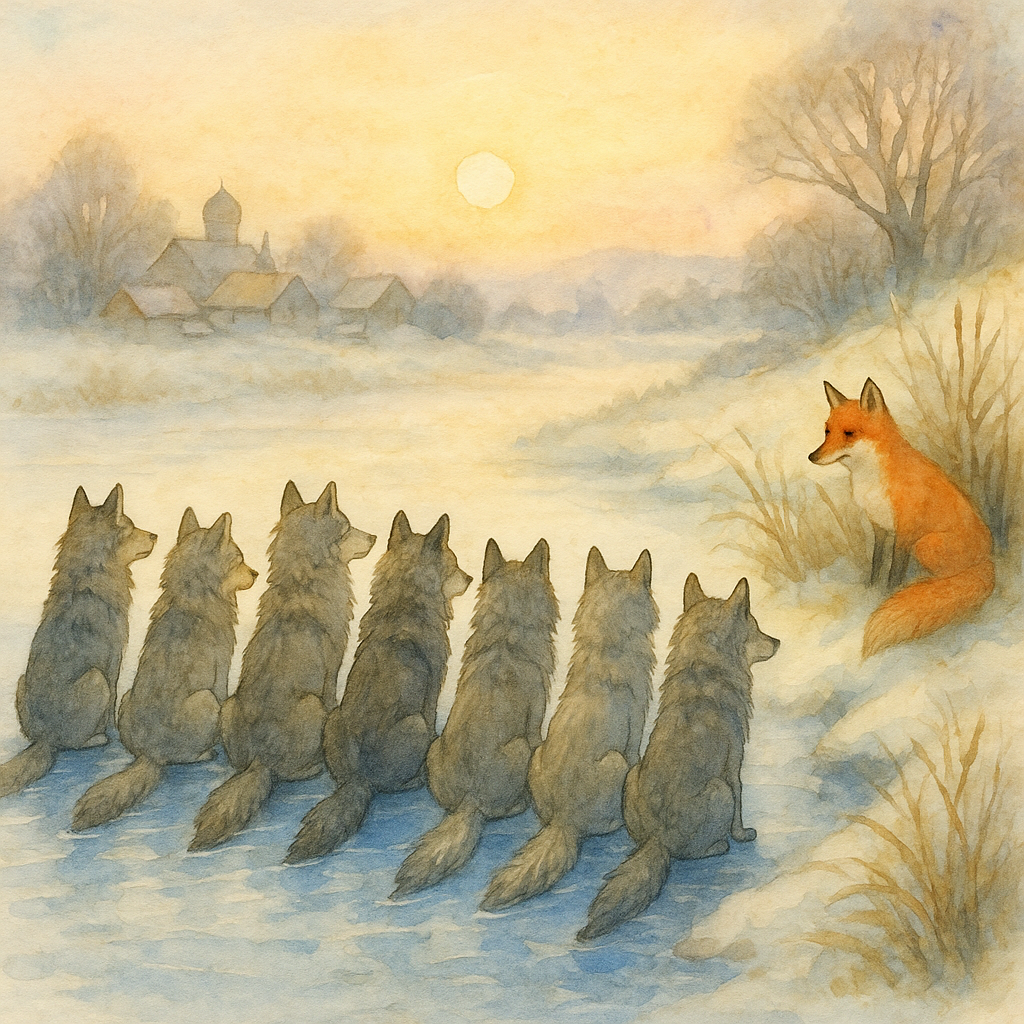
The fox led them to a river on the village’s edge. The night was icy. “Gazelles will come to drink at dawn,” said the fox. “If you sit quietly and dip your tails into the water, they’ll appear, and you’ll catch them easily.” The wolves, desperate with hunger, obeyed. One by one, they sat on the icy shore and dipped their tails into the freezing river.
“Be patient,” the fox advised. “I’ll hide upstream and give you a signal when they arrive.” He vanished into the reeds — and never returned. As the night grew colder, the water froze solid. By dawn, the wolves’ tails were stuck fast in the ice.
The morning punishment and freedom of the village
When the roosters crowed, the village dogs caught the wolves’ scent and began to bark furiously. Soon the villagers arrived, armed with sticks, shovels, and pitchforks. The wolves struggled, but the ice held them tight. The men beat them soundly, freeing the village from fear forever. As the crowd laughed in relief, the villager who once caught the fox smiled to himself: “So it was your trick again, bushy-tail.”
Moral and reflection
This story reminds us that greed and impatience often lead to disaster. The wolves’ hunger made them foolish; the fox’s deceit nearly cost him his life. Intelligence is valuable only when guided by honesty. For children, the tale teaches patience, critical thinking, and the importance of keeping one’s promises. Words, once given, carry weight — and cleverness without kindness brings no peace.
Word explanations
- Cunning — skill at achieving one’s ends by deceit or trickery.
- Gazelle — a small, graceful animal often used in folktales as a symbol of agility.
- Tail — the hindmost part of an animal; in this story, a key part of the fox’s trick.
- Pity — a feeling of compassion or sorrow for someone’s suffering.
FAQ — Frequently Asked Questions
What lesson does the story teach?
It teaches that greed and carelessness can trap us, while wisdom and patience lead to safety. It also warns that deceit may bring temporary success but lasting guilt.
Why did the wolves trust the fox?
They were blinded by hunger and hope. The story encourages children to think before trusting easy promises.
Is the fox a hero or a trickster?
Both. The fox’s wit saves the village but stems from self-interest. The tale shows that intelligence must be guided by honesty and responsibility.
 Read more adventures of Kirpi Nuk here.