 Fairy Tales, Stories & Games for Kids Fairy Tales, Stories & Games for Kids
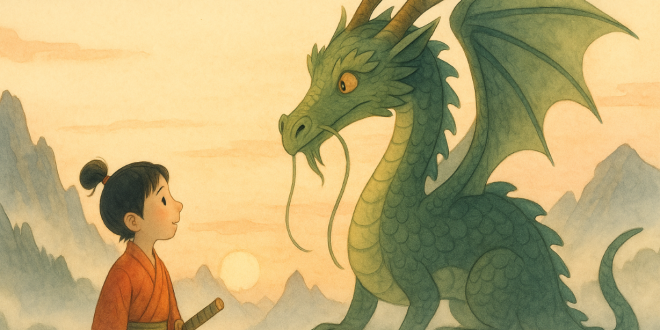
Samurai Ismayil and the Dragon — a great tale that turns fear into peace
Long ago, where mist embraced the peaks and stars felt near, a quiet village thrived—until a dragon rose from a deep cave demanding tribute.
Passing through, Samurai Ismayil chose not to fight first. He calmed his horse, left his sword sheathed, and climbed to learn the truth upon the heights.

Samurai Ismayil and the Dragon: the strength of empathy
At the cave mouth he called, “I came to understand, not to fight.” The dragon was startled; no one had asked why it raged. Once the mountains’ guardian, it had been driven away; loneliness had hardened its heart.
First misunderstanding and trial
Back in the village, people recoiled. A child cried, a few youths gathered wood for fire. Ismayil raised his hand: “Fear is natural; let us give trust a chance.” The dragon glided low, touching no one.
The village council deliberates
Elders gathered in the square. “Who saved us in the flood?” asked one. “Who cleared the pass after the avalanche?” whispered another. Old memories returned. They set a one-month trial: the dragon would guard the village; the people would show gratitude.
The vow of peace
Under moonlight, a small ceremony began. Children strung paper stars above the gate. Ismayil, the elders and the dragon swore together: “Understanding instead of fear, help instead of anger.” The dragon folded its wings and bowed.
Becoming a guardian again
Days passed. The dragon cleared mountain paths, shielded shepherds, and helped build a flood barrier. Laughter returned; rice sprouted; fishers sang. Seeing peace hold, Ismayil set out to aid others.
A light explained
This tale reminds us that, like Samurai Ismayil and the Dragon, a single word can light a heart’s dark room. Listening is courage; peace is its harvest.
 Kirpi Nuk-un digər macəralarını buradan oxu.
Frequently Asked Questions
What age is this tale best for?
Ideal for ages 3–8: short paragraphs, clear arc, and a positive resolution.
What is the core message?
Empathy and dialogue dissolve fear, rebuild trust, and create peace.