 Fairy Tales, Stories & Games for Kids Fairy Tales, Stories & Games for Kids
Samad and the bag fairy tale — when kindness becomes a habit
Samad and the bag fairy tale tells the story of a mischievous boy who transforms into a kind and gentle child through the lessons of a wise old man, Eldar, and a small bag filled with pebbles. It teaches children that goodness, once practiced, becomes a habit that brightens life itself.

Introduction
There was a boy named Samad in a quiet Azerbaijani village. He was bright and cheerful but terribly naughty. He threw stones at chickens, broke windows, and often caused trouble. Everyone in the village sighed whenever they heard his name. Yet, deep inside, Samad’s heart longed for love and kindness.
Eldar’s condition
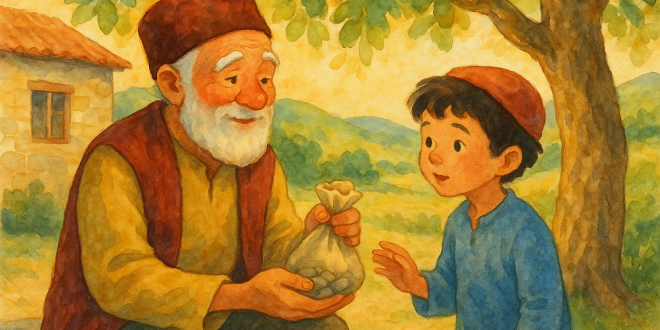
One day, the village elder, Grandfather Eldar, called Samad over with a gentle smile:
— Samad, would you like me to make it so that no one ever scolds you again?
— Of course, I would! — said Samad eagerly.
— Then here is my condition. See this small bag? You must fill it with tiny stones. But you may place a stone inside only when you do something good — help someone, show kindness, make another smile. When the bag is full, you can do whatever you wish.
Samad agreed happily. Eldar tied the bag to the branch of an old tree, where the sunlight danced across its fabric.
Days of kindness
The next morning, Samad looked at the empty bag. “I must do something good today,” he thought. That day, he chopped wood for an old man whose hands were too weak. He was tired, but when he dropped the first pebble into the bag, he felt warmth in his heart.
Day by day, Samad carried water to neighbors, helped elderly women, shared his toys, and spoke kindly to others. Each time, the bag grew heavier, and his heart lighter. He began to smile more often. The boy who once caused trouble now spread joy.
When the bag was full
A month later, Samad ran to Eldar with excitement:
— Grandfather, the bag is full! May I do whatever I wish now?
— Yes, my child, — Eldar said softly. — No one will scold you anymore.
The test of goodness
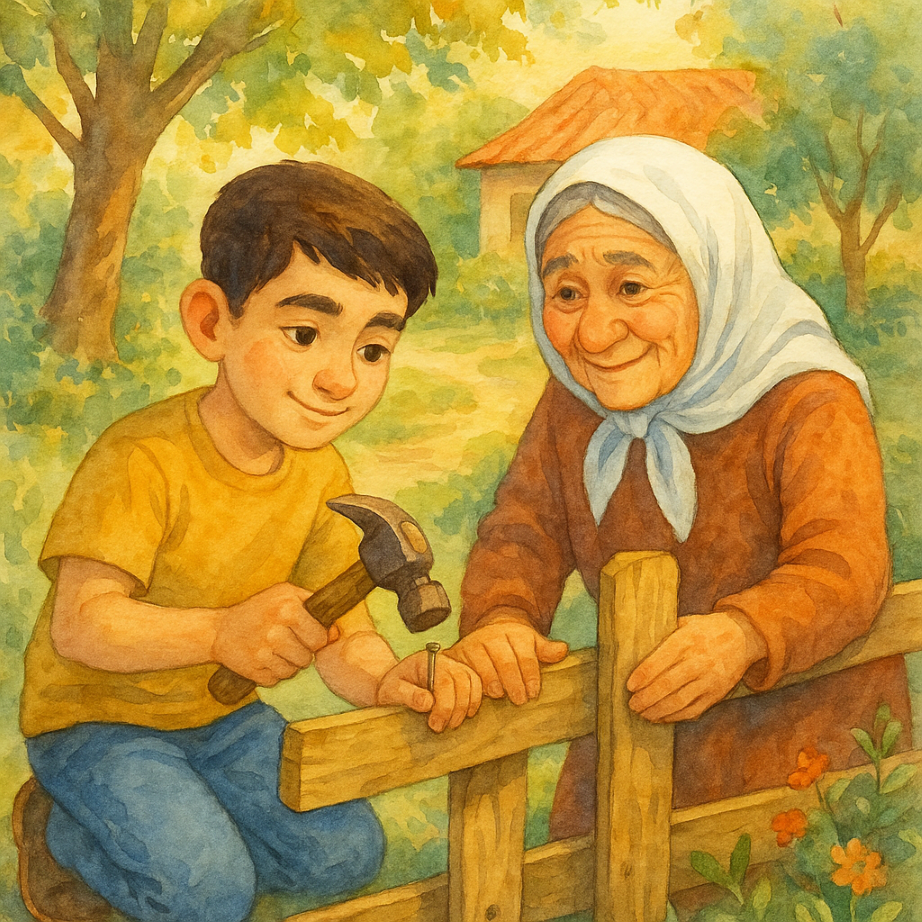
Samad left the yard happily. His neighbor, Aunt Telli, was fixing her broken wooden fence. For a moment, Samad wanted to kick the fence — just like old times — but then he stopped. “Let me help her instead,” he thought. Together, they lifted the fence. Aunt Telli smiled kindly:
— My boy, you’ve changed so much. You were once so mischievous, and now you’re the kindest child in the village. What did Eldar do to you?
Samad blushed but smiled. Inside, he knew: he no longer needed the bag to be good.
The lesson
Seasons passed, and the bag still hung from the tree — a quiet reminder of the boy who had changed. Samad had learned that goodness, once begun, never ends. The people in the village loved and respected him. And every time he helped someone, he remembered Eldar’s wise smile.
This fairy tale reminds us that kindness can start with small acts — but if done with love, it becomes part of who we are.
Glossary
- Grandfather Eldar — the wise old man of the village who teaches through love and example.
- Aunt Telli — the kind woman who symbolizes warmth and gratitude in everyday life.
FAQ — Frequently Asked Questions
What age group is “Samad and the bag fairy tale” suitable for?
This fairy tale is suitable for children aged 5–10. It can also be read with parents for younger children.
What moral lesson does this story teach?
It teaches that kindness is powerful and that everyone has the ability to change for the better through good deeds.
How can parents use this story?
Parents can use it to discuss what kindness means and how daily actions can make the world brighter.
 Discover more adventures of Kirpi Nuk here.