 Fairy Tales, Stories & Games for Kids Fairy Tales, Stories & Games for Kids
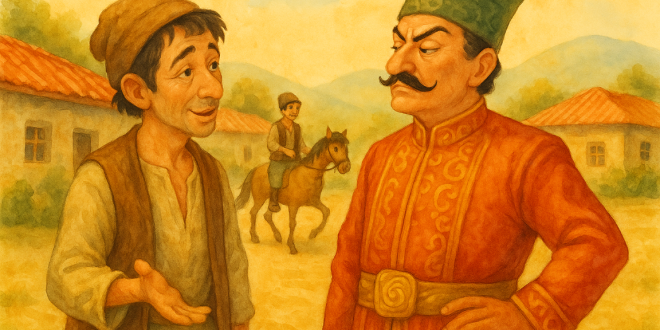
The Peasant and the Rich Man — A Trial of Mind and Gold
The Peasant and the Rich Man is a folk tale about the conflict between a humble peasant and a wealthy nobleman who trusted only his riches. In the end, the wise peasant proves that wisdom is stronger than gold. The story teaches children the importance of intelligence, fairness, and humility.
Introduction: Two Opposite Men
Once upon a time, there was a poor peasant and a rich man. The peasant was hardworking, wise, and kind-hearted. The rich man, however, relied on his gold, clothes, and status — yet he lacked true understanding. The villagers could easily tell them apart: the peasant’s hands were rough, but his mind was sharp; the rich man’s clothes glittered, but his heart was empty. As the saying goes, wisdom cannot be measured by wealth or fashion.
The Argument and the Wager
One day, they argued about what was more powerful — gold or wisdom. The rich man said angrily:
“Money can save a man from every trouble. Gold protects those who have it!”
The peasant replied calmly:
“Without wisdom, gold is useless. But with wisdom, even a poor man can survive.”
The rich man laughed and said:
“If your mind is stronger than my gold, I’ll give you a thousand coins. But if my gold proves mightier, you’ll serve me for life!”
The peasant agreed, and they decided to ask the king to judge between them.
The King’s Letter and the Danger
They went to the king, who, like the rich man, was not very wise. The king sealed a letter and sent them to the neighboring kingdom with it. Inside, the letter said only one terrible order:
“Kill these men immediately.”
When the neighboring king read it, he frowned and shouted, “Guards! Arrest them both!”
The rich man fell to his knees, trembling in fear. “Please, spare me! Take my gold instead!” he begged.
But the order was to be obeyed. The executioner was called, and the men were taken away. The peasant, however, remained calm.
The Peasant’s Wisdom and Clever Plan
As the executioner raised his sword, the peasant suddenly laughed. Everyone was surprised, and the king asked, “Why are you laughing? You are about to die!”
The peasant spoke calmly: “Five days ago, a wise man came to our king and said: ‘If these two men are killed, disaster will strike your land. But if another ruler kills them, that disaster will strike his own kingdom instead.’”
The king hesitated. Fear filled his heart. “If I execute them,” he thought, “perhaps misfortune will come to me.”
He quickly sent a message to the other king: “In three days, I will march upon your land!”
This threat gave the peasant and the rich man time to think. On their way back, the peasant said quietly, “Now you see, wisdom is stronger than gold.”
The Test: Battle and Victory
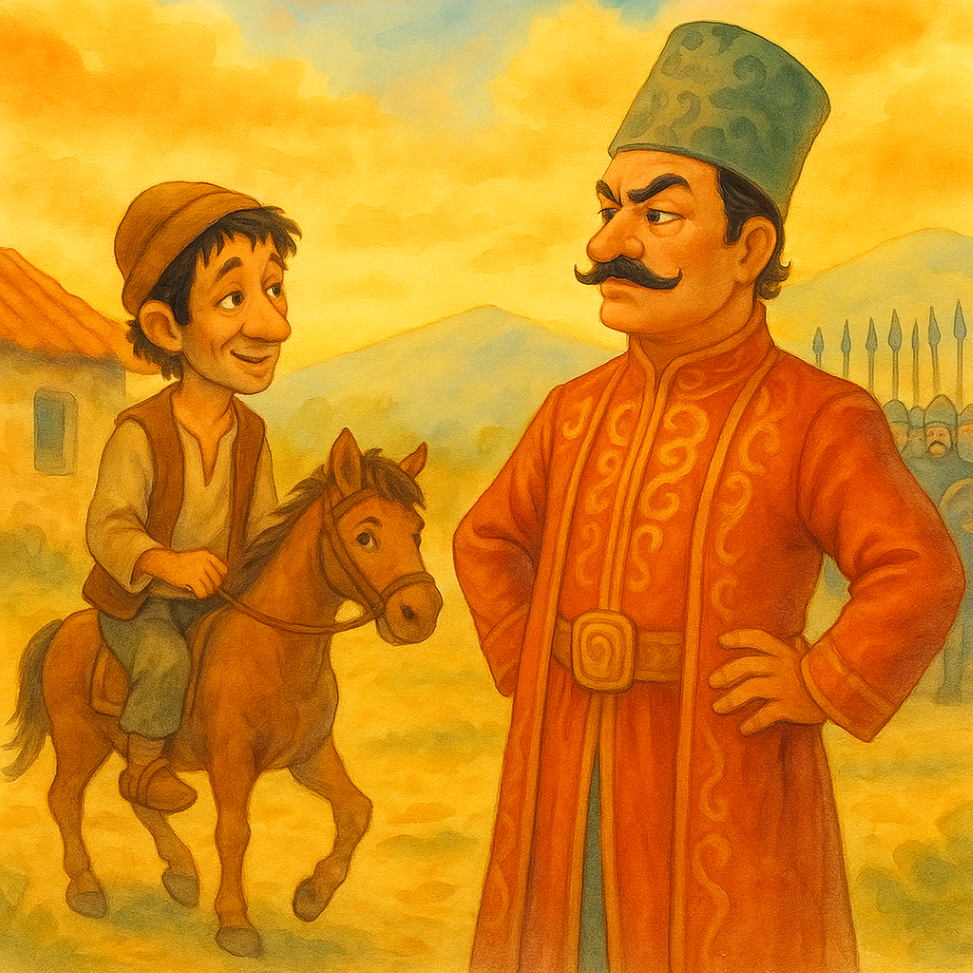
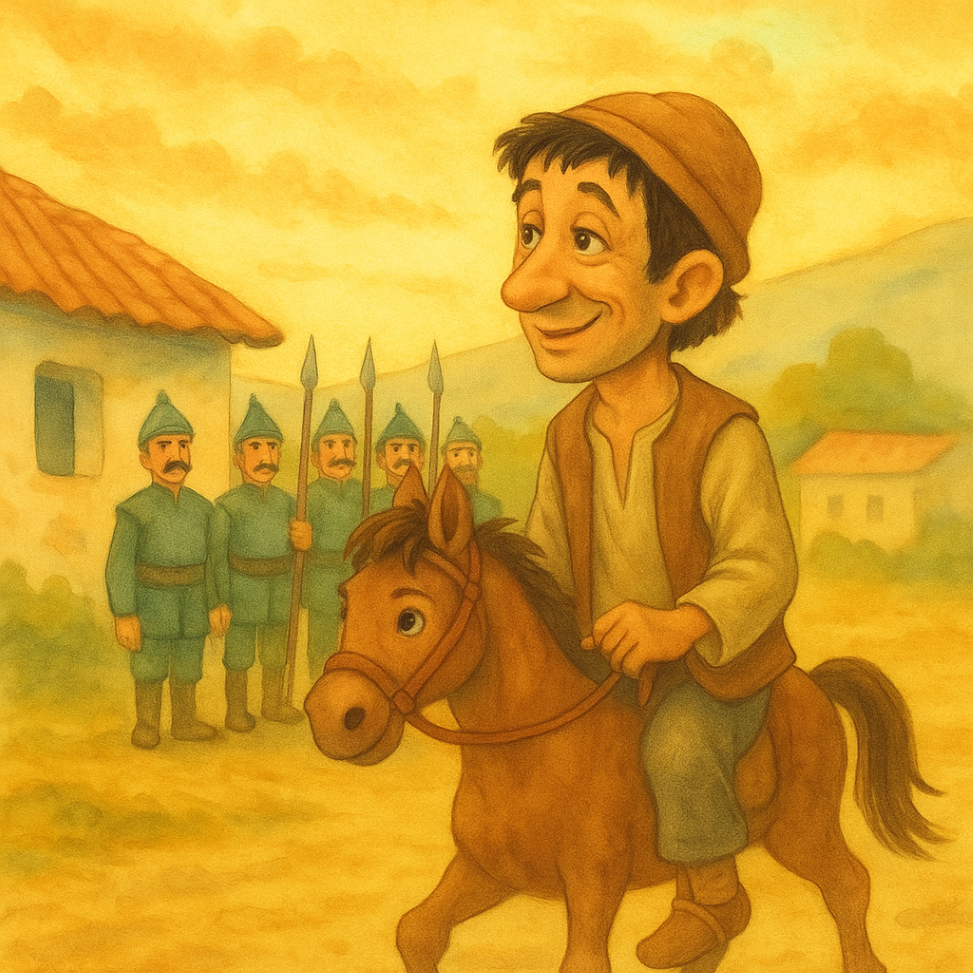
Three days later, the enemy army gathered at the border. The peasant asked for a horse and rode out alone to meet them. When he reached the soldiers, he did not fight — instead, he spoke wisely and calmly. He explained that war would only bring suffering to both lands, and peace would bring strength. His words touched the soldiers’ hearts.
The opposing king recognized the peasant — and fear returned. “If I harm this man,” he thought, “disaster will fall upon my own land.” He ordered his troops to retreat.
Thus, wisdom triumphed over force, and the peasant returned in peace. The rich man had no choice but to pay the thousand gold coins. The peasant took only a small bag and said:
“Remember, gold cannot help a fool. But a wise man can earn riches any time he wishes.”
Moral and Lesson
This tale reminds children that wealth does not guarantee happiness or safety. Intelligence, fairness, and a kind heart are far stronger. Problems can be solved not by anger or greed, but by thought and words.
Word Explanations
- Peasant — a humble, hardworking man representing wisdom and honesty.
- Rich man — a symbol of greed, arrogance, and dependence on wealth.
- King — a ruler whose choices reflect how power and greed can blind wisdom.
FAQ — Frequently Asked Questions
What does this story teach children?
It teaches that wisdom, kindness, and peace are greater than gold or wealth. It encourages fairness and thoughtful problem-solving.
How can parents discuss this story with children?
Parents may ask: “Why did the peasant win?”, “Can money always solve problems?”, “How can we solve conflicts with words?” Such questions help children reflect and learn.
What age group is this story suitable for?
It’s best for ages 6–12. For younger children, the story can be simplified while keeping its message intact.
 Read more of Kirpi Nuk’s adventures